
Reviewed · MUSIC CITY TROLLEY LOOPS
Music City Sightseeing Tour by Bus
Music history in 90 minutes. This small-group Nashville sightseeing tour strings together landmark stops and city stories, with a heavy emphasis on how the music world grew here.
I really like the 14-passenger cap, because you actually hear your guide and see the streets clearly from the vehicle. I also like how the tour connects people and sounds to specific places, so you’re not just watching buildings go by.
One thing to consider: this is a short run, so you get quick looks at several areas rather than a long hangout in one neighborhood—so if your main goal is Lower Broadway honky-tonks, you may want a different add-on day plan.
In This Review
- Key Things to Know Before You Go
- A Small-Group Nashville Tour That Keeps Moving
- Price and Value: What $47.99 Really Buys
- Where You’ll Go: Downtown to Music Row in One Shot
- Downtown Nashville: Saloons, Suffrage, and the City’s Turning Points
- The Music Hall Connection: Joe Chambers and the Municipal Auditorium
- Bicentennial Capitol Mall State Park: Civic Tennessee in Marble and Memorials
- Printer’s Alley: From Printing Houses to Prohibition-Era Sound
- An Egyptian Revival Church Tied to Andrew Jackson and the Civil War
- The Tennessee State Capitol: William Strickland and Greek Revival Without a Dome
- Marathon Village: Shops, a Brewery/Distillery Feel, and a Pickers Connection
- Music Row: Recording Studios and the Factory Where Songs Get Made
- Is This Tour for You? Best Fit and Best Alternatives
- Should You Book Music City Sightseeing Tour by Bus?
- FAQ
- How long is the Nashville Music City Sightseeing Tour?
- What does the tour cost?
- How many people are on the tour?
- Where does the tour start and end?
- Is the tour offered in English?
- Is there a mobile ticket?
- Are admission tickets included for stops?
- Are food and drinks included?
- Can I cancel for a full refund?
- What if the tour is canceled due to weather or not enough travelers?
Key Things to Know Before You Go
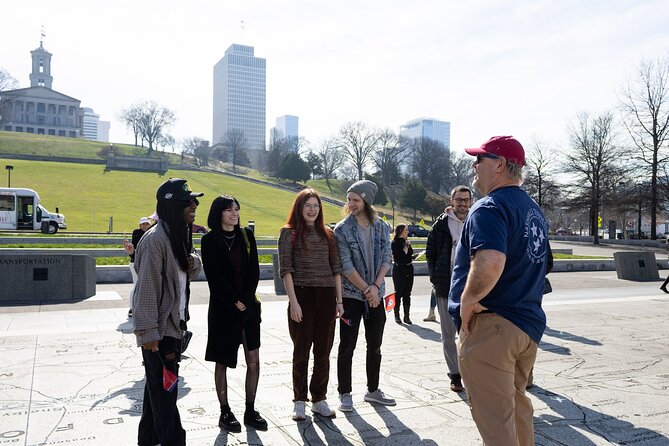
- Up to 14 people means more room for conversation and better group atmosphere
- 90 minutes keeps the pace brisk, with short stops mixed into the drive-bys
- Music-focused storytelling ties artists, eras, and turning points to real corners
- No admission fees required at the listed stops, so your ticket cost stays straightforward
- Air-conditioned transportation with clear views helps on warm or changeable Tennessee days
Other trolley and open-top loops of Nashville
- Nashville Hop On Hop Off Trolley Tour★ 4.5 · 5,643 reviews
- Best of Nashville City Sightseeing Tour on Double Decker Bus★ 4.5 · 2,601 reviews
- Explore the City of Nashville Sightseeing Tour by Golf Cart★ 5.0 · 2,544 reviews
- Discover Nashville City Tour with Entry to Ryman & Country Music Hall of Fame★ 4.5 · 2,412 reviews
A Small-Group Nashville Tour That Keeps Moving
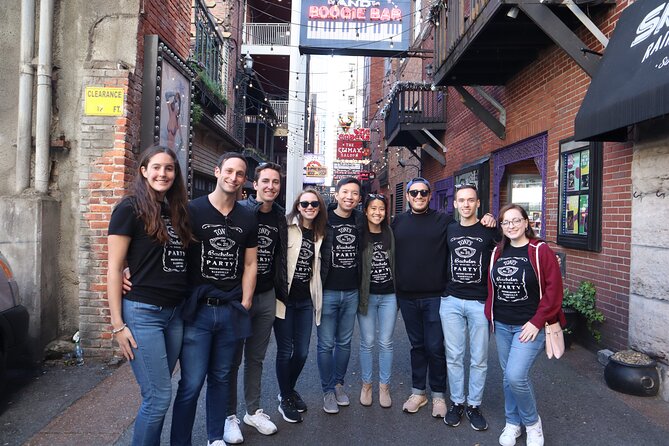
This is a tight, guided loop designed to get you oriented fast. You start and end at 520 Commerce St, Nashville, TN 37203, and you’ll be on an air-conditioned vehicle with a limited headcount (max 14 travelers). That small size matters in Nashville, because the city is spread out and the details matter.
The guide approach also seems built for interaction. In past tour experiences with this operator, the guides have been friendly and willing to tailor the conversation to the group’s interests. I like that because Nashville can swing from music-nerd facts to civil-rights stories to pure sightseeing, and it’s easier when your guide can steer the tone.
If you’re traveling with kids, older family members, or anyone who doesn’t want a long day, the overall timing is a good fit. It’s also offered in English, and you’ll get a mobile ticket after booking.
Price and Value: What $47.99 Really Buys
At $47.99 per person for about 1 hour 30 minutes, the price isn’t just for transportation. You’re paying for a guided ride that covers history, music industry context, and stories about the characters who shaped the city—plus the convenience of not having to plan a route on your own.
The big value point here is that no admissions are required for the stops listed. Even though the tour includes a music museum-style stop, the info provided indicates ticketed entry is free at that stop. You’re also not responsible for food on the tour itself since food and drinks are not included.
So, the practical equation is simple: you’re paying for guidance + vehicle time, not for lots of extra entrances. If you prefer to spend your money on a real meal, a show, or a tasting somewhere you choose, this structure fits well.
Where You’ll Go: Downtown to Music Row in One Shot
This tour moves through key Nashville zones that help you understand how the city evolved. You’ll spend the most time in the downtown area, then branch out to important civic spaces, music-adjacent districts, and major industry corridors.
Here’s the flow you can expect:
- Downtown Nashville for a longer storytelling segment
- Bicentennial Capitol Mall State Park for parks, memorials, and the city’s civic edge
- Printer’s Alley for the music-and-nightlife backstory
- A stop that highlights an Egyptian Revival church tied to Andrew Jackson and Civil War use
- Tennessee State Capitol, including William Strickland design details
- Marathon Village for shops and entertainment energy
- Music Row for the modern studio-and-label feel
You’ll also pass areas that help connect the dots, even when the stops are short. That’s part of the trade-off: you get breadth and context, not a deep, one-neighborhood experience.


Downtown Nashville: Saloons, Suffrage, and the City’s Turning Points

Downtown is where the tour slows down, with about 30 minutes here. You’re meant to leave with a local-feeling angle on a city that has layers. The story line focuses on Nashville’s early foundations—migration from the Northeast, Native American influence, and frontier-minded settlers—then shifts into the post–Civil War era when downtown life included many saloons.
What I like about this section is that it doesn’t treat downtown like a single theme park street. The tour’s framing includes surprising civic moments, like Nashville’s role in women’s suffrage, and its importance as an epicenter of change in the civil rights movement. That kind of context changes how you look at buildings later, even if you don’t linger in one spot.
You’re also going past places that explain why Nashville became shorthand for Music City. After this segment, you’re better positioned to understand why music culture isn’t separate from civic culture here—it’s woven into the city’s story.
Practical note: since this portion is guided and time is limited, be ready to take photos quickly when your guide points out specific details. The guide’s value is the narration, so listening matters more than trying to read every sign.
The Music Hall Connection: Joe Chambers and the Municipal Auditorium
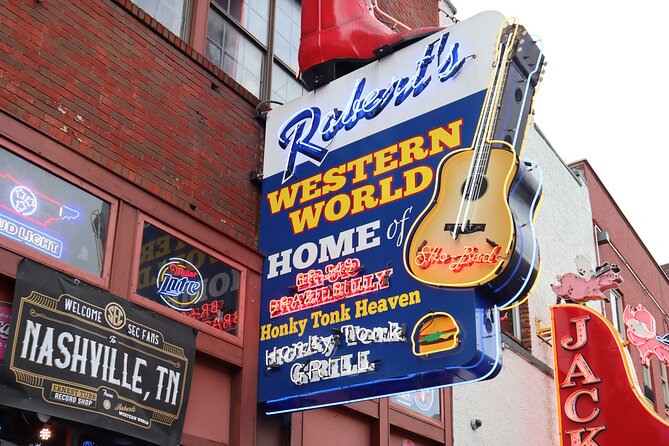
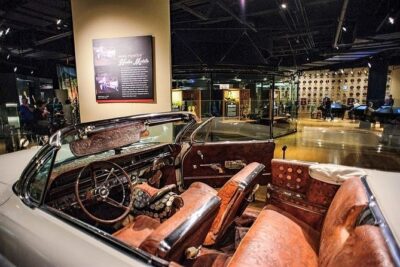
One stop in the downtown block is aimed at music fans, and it’s specifically tied to Nashville guitar legend Joe Chambers. You’ll head to the museum/hall-of-fame style space that pays tribute to musicians across genres, housed in the Municipal Auditorium.
What makes this stop meaningful is the range. The exhibits name-check major figures across different eras and styles, including Jimi Hendrix, Bob Dylan, and Johnny Cash. Even if you’re not a hardcore discography person, seeing how the exhibit frames influence across genres helps you connect the dots between modern Nashville and the artists who came before.
This is also a good place to pause if your group has mixed interests—people who love music get a focused moment, while everyone else can use it to ground the city story before moving on.
Bicentennial Capitol Mall State Park: Civic Tennessee in Marble and Memorials
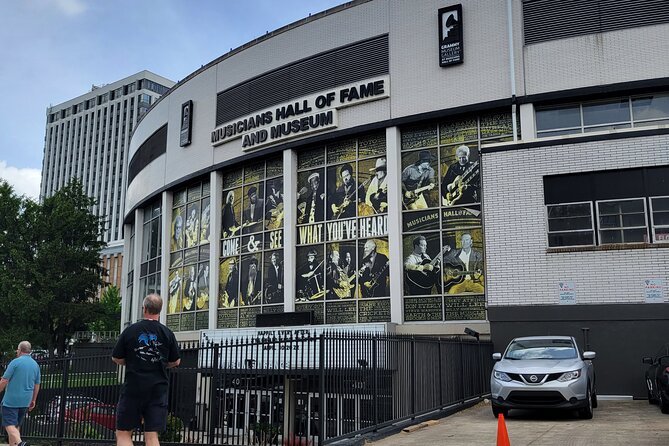
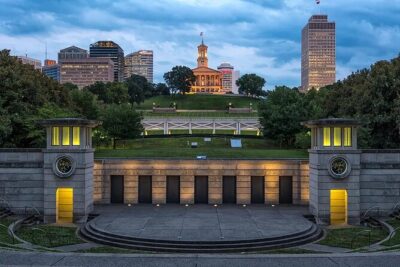
Next up is Bicentennial Capitol Mall State Park, with about 15 minutes here. This stop is built for visitors who want more than band lore. You’ll ride through a major outdoor space that marks Tennessee’s 200th anniversary, and the guide highlights a marble wall historical timeline along with amphitheater space, fountains, and memorials.
The setting is also convenient for picture-taking. You’re not just stuck in a vehicle; you get enough time to orient yourself in the park environment and see how the civic center shapes the city.
The best part is the neighborhood context: this park sits next to the Nashville Sounds Baseball Stadium (noted for its guitar scoreboard), the Tennessee State Library, the Tennessee State Museum, and the Nashville Farmer’s Market. Even if you don’t enter those places, seeing them in relation to the Capitol area helps you plan future stops on your own.
Printer’s Alley: From Printing Houses to Prohibition-Era Sound
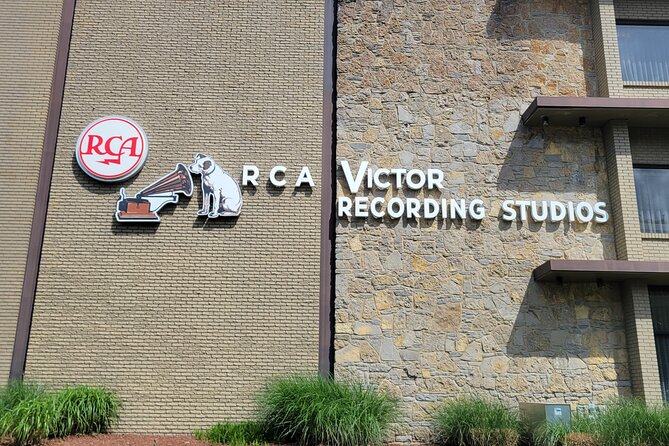
Printer’s Alley is short on time (about 5 minutes), but it’s one of the more story-packed stops. The tour covers the area’s shift from 1800s printing and publishing services into a later period where Prohibition helped turn it into a musical hotspot and entertainment zone.
I like the way this stop explains cause-and-effect instead of just saying it’s famous. When you understand how nightlife evolved under constraints, you get why today’s music culture feels like it grew from working districts and improvisation.
This alley is also associated with Skull’s Rainbow Room, described as a Nashville treasure. The stop connects the neighborhood to major entertainers over time, including Jimi Hendrix, Bob Dylan, Sammy Davis Jr., Paul McCartney, Elvis, and Johnny Cash. Even in a few minutes, that list helps you see Printer’s Alley as more than a nightlife alley—it’s a historical link between eras.
An Egyptian Revival Church Tied to Andrew Jackson and the Civil War

You’ll also make a short stop connected to an early national landmark: a church built in Egyptian Revival architecture by William Strickland (also linked to the Tennessee State Capital). The tour notes that the building is pre–Civil War and served as a Union hospital during the Civil War.
It’s also described as the home church of President Andrew Jackson. That combination—distinctive architecture, Civil War use, and a presidential connection—turns a quick stop into a meaningful snapshot of how Nashville’s national role formed.
Because this stop is brief, go in with the right mindset: you’re not there to read every detail slowly. You’re there to take in the architecture and learn the story your guide explains.
The Tennessee State Capitol: William Strickland and Greek Revival Without a Dome
Another important stop is the Tennessee State Capital, positioned as surviving the Civil War and standing since the 1850s. You’ll get design context about its Greek Revival architecture, and a standout detail: it’s one of only 12 state capitals that does not feature a dome.
The tour also mentions that some people are entombed in the building. That’s a helpful detail because it emphasizes this isn’t just a photo backdrop—it’s tied to state legacy in a physical way.
And yes, William Strickland keeps showing up in the story. If you’re the type who likes architectural continuity, this is satisfying: you see how one designer’s choices shape multiple civic landmarks.
Marathon Village: Shops, a Brewery/Distillery Feel, and a Pickers Connection
After the civic and historic blocks, the tour shifts into a more casual, modern Nashville vibe at Marathon Village. You’re told it’s a former early 20th-century automobile company area called Marathon Motor Works, and now it functions as a shopping and entertainment zone.
The stop highlights places like shops, and a distillery/brewery atmosphere, plus a connection to American Pickers. If your idea of Nashville includes not just music, but also the shopping-and-stroll side, this is where you’ll start feeling it.
You’ll also find a performance venue described as part of the area, which makes Marathon Village a practical bridge between sightseeing and planning a night out.
Music Row: Recording Studios and the Factory Where Songs Get Made
The final music-focused stop is Music Row, with about 10 minutes here. The tour is careful to distinguish Music Row from Lower Broadway, which matters because a lot of visitors confuse the two. Music Row is framed as the industry corridor—lined with recording studios, recording labels, publishing companies, and songwriter’s studios.
You’ll hear it described as both historical and functioning at the same time. That’s the key idea: this isn’t a dead museum street. It’s presented as a working music business district, where the infrastructure for Nashville’s sound exists daily.
The artists listed in the tour context include names from multiple generations, from Dylan and Elvis through Foo Fighters, Tim McGraw, George Strait, Paul McCartney, Johnny Cash, and others. Even in a short time, that gives you a sense of why so many careers connect to this part of town.
Real-world tip: if you want a photo, do it quickly. If you want a deeper understanding, save your detailed studio or label visits for separate day trips or guided industry tours, because this stop is designed as a taste, not a full immersion.
Is This Tour for You? Best Fit and Best Alternatives
This tour is a strong choice if you want:
- A first-day Nashville orientation
- A mix of music industry context and city history
- A short schedule that still covers multiple neighborhoods
- A small group that keeps the experience personal (max 14)
It’s also smart if you plan to spend later time on your own. After you get the layout in your head—from downtown to Capitol Mall to Printer’s Alley to Music Row—you can pick a day for Broadway honky-tonks, a museum you care about, or a specific show.
If your top priority is Lower Broadway (honky-tonks, live-music hopping, bar crawls), you should know this ride isn’t built around a long Broadway-focused block. It offers broad music-city context, but it’s not promising a big, time-heavy Broadway detour. So you might want to pair it with a separate evening plan.
Should You Book Music City Sightseeing Tour by Bus?
I’d book it if you want a one-and-a-half-hour hit of Nashville that goes beyond signs and street names. The best value is the pairing of small-group pacing with stories that connect music to real places—downtown turning points, Printer’s Alley nightlife evolution, civic landmarks tied to William Strickland, and the working-world energy of Music Row.
Skip or rethink if your dream Nashville day is one neighborhood for hours—especially if you want a deep dive into Lower Broadway nightlife. In that case, this tour may feel like a sampler, and you’ll still need another plan for the specific vibe you want.
If you’re flexible and want the big picture with just enough detail to guide your next steps, this is a practical, high-value way to start.
FAQ
How long is the Nashville Music City Sightseeing Tour?
It’s approximately 1 hour 30 minutes.
What does the tour cost?
The price is $47.99 per person.
How many people are on the tour?
The group is limited to a maximum of 14 travelers.
Where does the tour start and end?
The tour starts at 520 Commerce St, Nashville, TN 37203, USA and ends back at the same meeting point.
Is the tour offered in English?
Yes, it’s offered in English.
Is there a mobile ticket?
Yes, it includes a mobile ticket.
Are admission tickets included for stops?
No. The tour notes that no admissions fees are included, and it also indicates there are no stops that require admission fees.
Are food and drinks included?
No. Food & drinks are not included.
Can I cancel for a full refund?
Yes. You can cancel up to 24 hours in advance for a full refund.
What if the tour is canceled due to weather or not enough travelers?
If it’s canceled due to poor weather, you’ll be offered a different date or a full refund. If it’s canceled because the minimum number of travelers isn’t met, you’ll be offered a different experience or a full refund.
Another Loop Around Music City
- Nashville Hop On Hop Off Trolley Tour★ 4.5 · 5,643 reviews
- Best of Nashville City Sightseeing Tour on Double Decker Bus★ 4.5 · 2,601 reviews
- Explore the City of Nashville Sightseeing Tour by Golf Cart★ 5.0 · 2,544 reviews
- Discover Nashville City Tour with Entry to Ryman & Country Music Hall of Fame★ 4.5 · 2,412 reviews
- Nashville: Hop-on Hop-off Trolley Tour★ 4.6 · 1,634 reviews
Fresh on the Nashville review desk





Music City Trolley Loops, compared.
 ★ 4.5Nashville Hop On Hop Off Trolley TourFrom $535,643 reviews
 ★ 4.5Best of Nashville City Sightseeing Tour on Double Decker BusFrom $342,601 reviews
 ★ 5.0Explore the City of Nashville Sightseeing Tour by Golf CartFrom $552,544 reviews
 ★ 4.5Discover Nashville City Tour with Entry to Ryman & Country Music Hall of FameFrom $1032,412 reviews
★ 4.6Hop-on Hop-off Trolley TourFrom $531,634 reviews
★ 4.5Discover Nashville City Tour with Entry to Ryman & Country Music Hall of FameFrom $1032,412 reviews
★ 4.6Hop-on Hop-off Trolley TourFrom $531,634 reviews
 ★ 4.5Nashville Evening Trolley TourFrom $471,042 reviews
 ★ 5.0Delicious Donuts of Nashville: A Sweet City Walking AdventureFrom $75979 reviews
 ★ 4.5“Murder in Music City” Night-Time Ghost Walking Tour of NashvilleFrom $34742 reviews
Browse the lists this tour appears in