
Reviewed · E-BIKE & PEDAL TOURS
Nashville’s Historic Electric Bike Tour
That first glide through Nashville feels like a backstage pass. You’ll roll past the places tied to country legends and modern stars, with guide-led storytelling you hear through your helmet audio as you ride. It’s a fast, fun way to see more than just Broadway, without spending the whole day in traffic.
Two things I’d point to right away: the high-energy guides (names like Bee/Bea, Cash, and Donny pop up in the guide spotlight) and the easy cruising thanks to electric assist when the roads get hilly. One thing to consider: you do need to be comfortable operating an adult electric bike, including being able to power yourself unaided at times in traffic and around stops.
In This Review
- Key highlights you’ll feel within minutes
- First Pedal Push: How the tour starts on 5th Ave North
- How the e-bikes work when the ride gets real
- Downtown Nashville and Music Row: where the whole city’s beat begins
- Lower Broadway’s Honky-Tonk Highway: music venues in walking distance
- Grand Ole Opry area: the Mother Church of Country Music
- Printer’s Alley: tiny streets that used to be chaotic
- Marathon Village: the industrial history turn
- The Gulch and Union Station: modern Nashville with classic architecture
- Nissan Stadium, Bridgestone Arena, and the music-museum corridor
- Bicentennial Capitol Mall State Park: the postcard break with a payoff
- RCA Studio B and the final Music Row pass
- Price and value: why $69.99 can make sense in two hours
- Who should book this (and who should think twice)
- Quick tips to get the most out of the ride
- Should you book Nashville’s Historic Electric Bike Tour?
- FAQ
- How long is the Nashville Historic Electric Bike Tour?
- How much does it cost?
- Where does the tour start and end?
- What’s included with the tour price?
- Is the tour offered in English?
- Do I need to pedal, or is it fully electric?
- Are admissions included for every stop?
- How big is the group?
- What kind of rider fitness or limits are required?
- What if weather is bad?
Key highlights you’ll feel within minutes
- Helmet audio narration so you’re not constantly stopping for facts
- Music Row + Lower Broadway in one loop, then off-the-main-street neighborhoods
- Quick, well-timed photo stops at big-ticket sights like Bridgestone Arena and Nissan Stadium
- Printer’s Alley and the industrial-to-makers vibe at Marathon Village
- The Gulch photo moments plus Union Station’s restored exterior
- Small groups (max 12) keep the pace controlled and help the guide manage safety
More e-bike and pedal rides across Nashville
- Nashville E-Bike Tour: Explore the Heart of Music City★ 5.0 · 444 reviews
- Downtown Nashville’s Hidden Gems E-bike Tour★ 5.0 · 372 reviews
- The Original Music City Electric Bicycle Guided City Tour 16miles★ 5.0 · 354 reviews
- Nashville’s Historic Electric Bike Tour★ 5.0 · 189 reviews
First Pedal Push: How the tour starts on 5th Ave North
The tour meets at 144 5th Ave N, Nashville. From that starting point, you’ll get set up with your bike, helmet, and safety vest, plus a personal listening device for the narration. The vibe here is practical: short orientation, then you’re rolling.
Most of the ride is spent moving between neighborhoods rather than waiting around. The whole experience runs about 2 hours (with roughly 10 minutes of orientation and 10 minutes of intermission built into the flow), and the start time can slide a few minutes based on timing and traffic.
If you like a tour that feels like local commuting—just with better views and better stories—this format works. You’re not stuck on one street the whole time.
How the e-bikes work when the ride gets real
You’ll be riding an electric bike that’s designed for city use, but there are a few non-negotiables. You must be able to safely mount and dismount, walk alongside the bike as needed, and operate it with power from you at times (even without pedal assist). There’s also a weight limit listed at 350 lbs.
That matters because Nashville can mean mixed road conditions: normal streets, busier intersections, and times when you may be guiding yourself through traffic patterns. The good news is that multiple guides emphasize safety and comfort, and several riders highlight that the e-bike power makes the ride manageable even with hills.
If you’re nervous about balance or stopping/starting, plan to take the orientation seriously. You’ll usually do best if you arrive ready to practice a few basic bike moves right then.
Downtown Nashville and Music Row: where the whole city’s beat begins
Your first stop is Downtown Nashville, where you start learning what you’re actually going to see and why it matters. After that, the tour flows into Music Row, the recording-industry belt that helped put Nashville on the global map.
On Music Row, you’re looking at the business side of the music dream: studios, record labels, management offices, and support industries. The tour also points out the big-name connections you’ll recognize, from Taylor Swift and Dolly Parton to Elvis Presley, Johnny Cash, Garth Brooks, and more.
A nice detail here: the tour isn’t just naming famous people. It uses those names as waypoints to explain how the industry shaped neighborhoods and street life. If you’re a “how did this happen” person, you’ll like the structure.
More history walks around Nashville


Lower Broadway’s Honky-Tonk Highway: music venues in walking distance

Then you hit what’s often the most fun section visually: the Honky Tonk Highway, a compact five-block strip packed with music venues. This is the live-music hub—restaurants for your ears, basically—from 10am to 3am daily.
As you ride, you pass major venue names such as Ole Red (Blake Shelton), Luke’s 32 Bridge, Acme Feed and Seed, Hard Rock Cafe, Robert’s Western World, and John Rich’s Redneck Riviera, plus many more. Even if you don’t go inside, it helps to see how dense the scene is. You get the sense that Nashville’s music economy isn’t spread out—it’s concentrated.
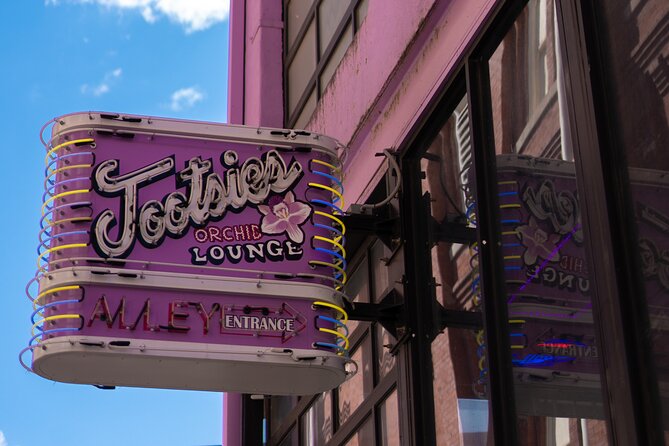
The tour also spotlights one iconic honky-tonk tied to a legendary purple hue. It’s described as the proving grounds where artists have tried their luck over decades, from early country stars like Willie Nelson and Patsy Cline to more modern passer-throughs like Pink and Ed Sheeran. This stop turns into an easy “pause for a photo, then ride again” moment.
Grand Ole Opry area: the Mother Church of Country Music
Next you roll into another major landmark area: the Grand Ole Opry. The tour frames it as the Mother Church of Country Music, and it notes that it’s recognized as a National Historic Landmark and also tied to the Rock and Roll Hall of Fame as a sight.
Even if you’re not buying museum time, the staging and signage around Opry history is part of the experience. You start to understand why this city exports stories as much as it exports songs: the myth and the performance spaces feed each other.
If you’re the type who reads posters and signs slowly, you’ll love this portion. If you’re the type who hates stopping for photos, the tight stops still make it doable.
Printer’s Alley: tiny streets that used to be chaotic

After the big-stage energy, the tour shifts to Printer’s Alley, described as Nashville’s original live entertainment pocket. This area has had a wild mix of past uses—things like speakeasies and blue bars—and it’s where the story feels more “alleycat” than brochure.
The tour also connects the alley to famous figures such as Elvis Presley, Jimi Hendrix, Frank Sinatra, and the Supremes. You’ll get a sense for how Nashville’s nightlife history isn’t just about one long street. It’s about layers, back doors, and rooms you can only find if someone guides you.
One practical perk: this stop lists admission ticket included. That’s a moment where the tour gives you more than a photo-op.
Marathon Village: the industrial history turn
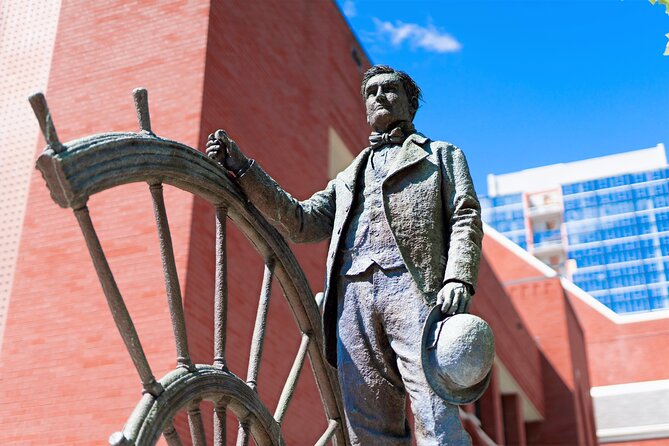
Then it’s on to Marathon Village, once a major vehicle manufacturing site. Today, it’s a cluster of local makers, artists, vendors, and boutique shops.
Expect to hear the names of places like the Jack Daniels Store, Nelson’s Greenbrier Distillery, and Antique Archeology (the Nashville spot connected to the American Pickers brand). Even if you just walk a bit and look, you’ll understand the shift: Nashville reuses its old structures instead of replacing them.
This is also a good reset after earlier music-heavy stops. The mood is calmer, and you get a “craft and commerce” feel instead of constant nightlife cues.
The Gulch and Union Station: modern Nashville with classic architecture
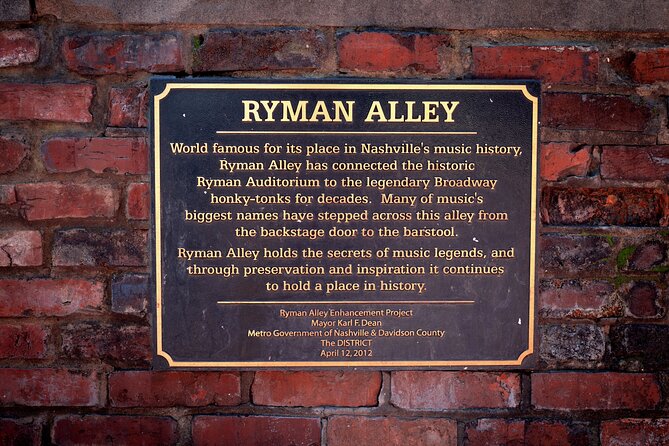
From there, you ride into The Gulch, Nashville’s fast-growing high-end neighborhood. The Gulch section is built for that in-between moment: you’re still sightseeing, but you’re now seeing the city’s newer face—hotels, restaurants, shops, and public art.
The tour includes photo-focused spots such as the famed “What Lifts You” angel wings mural. It also points out the Station Inn as a home for bluegrass music, and you’ll get a photo chance with Union Station.
Union Station is the kind of landmark that makes e-biking feel worth it. You’re not just seeing a building from afar. You’re arriving at it by bike, with the city sliding by around you, then stopping briefly to appreciate the exterior restoration.
This section lists admission ticket free for The Gulch stop, so you’re mainly using your time to look, photograph, and take in street energy.
Nissan Stadium, Bridgestone Arena, and the music-museum corridor
Next, the tour pivots into big-event territory. You pass the Nissan Stadium (home of the Tennessee Titans) and the Bridgestone Arena (home of the Nashville Predators). These stops help you see another side of Nashville: sports as a key part of the city’s public identity.
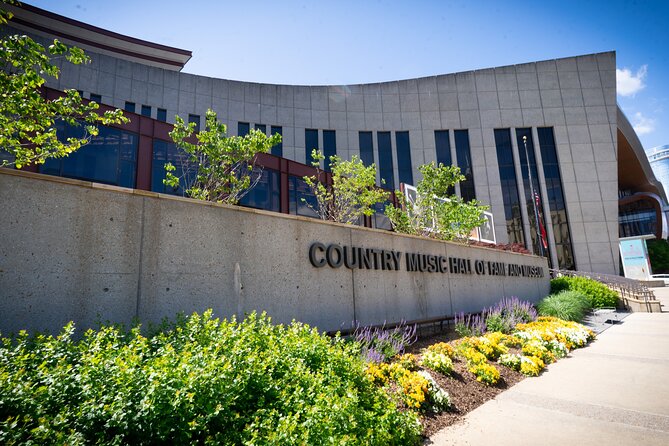
After that, the route includes the Country Music Hall of Fame and Museum and the Musicians Hall of Fame and Museum as key stops. The tour frames the Country Music Hall of Fame as one of the world’s largest museums and research centers dedicated to American vernacular music. The Musicians Hall of Fame focuses on artists who worked behind the scenes to make iconic music across genres and instruments.
It also notes the Municipal Auditorium, once a major live venue with a long list of headline acts tied to big tours and awards. This part of the ride is a good reminder that Nashville’s music story isn’t only about recording studios. It also lives in theaters, arenas, and stages where crowds gather.
Bicentennial Capitol Mall State Park: the postcard break with a payoff
A highlight for many people is the Bicentennial Capitol Mall State Park stop. It’s described as a beloved park tied to Tennessee’s 200-year anniversary, and this stop includes admission ticket included.
This is where the tour gives you a scenic break and a view. The tour notes that the Tennessee State Capitol is home to legislative bodies and the governor’s office, with a free tour option of the Greek-revival building plus panoramic views over Downtown Nashville.
Even if you’re not the kind of person who plans government-building visits, the views make it worth it. It’s the moment where you see the “map” of the city after a concentrated ride through music neighborhoods.
The tour also skims the south edge of Vanderbilt’s campus. You’ll see the campus feel quickly—iron fencing, magnolia-lined surroundings—and then you move on before it becomes a time sink.
RCA Studio B and the final Music Row pass
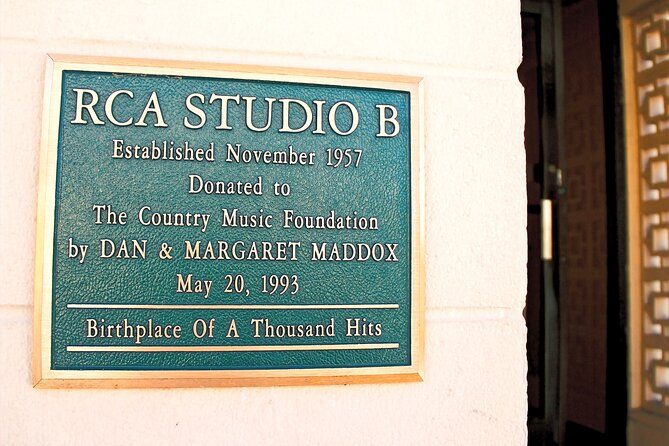
The route ends with another major music-industry anchor: RCA Studio B. It’s described as built in 1957, and it’s known as the birthplace for the “Nashville Sound,” a style featuring background vocals and strings that helped Nashville become an international recording center.
Stop detail to know: RCA Studio B lists admission ticket not included. So you’ll be using this as a look-and-absorb moment unless you plan to add ticketed time on your own.
Finally, the tour circles back to Music Row for a last stretch that lists admission ticket included. This is the wrap-up zone where the city’s music industry story lands again, now that you’ve already seen how nightlife, history, and modern neighborhoods connect back to recording culture.
Price and value: why $69.99 can make sense in two hours
At $69.99 per person for about 2 hours, this tour sits in a mid-range spot for Nashville. The real value isn’t just the sites—it’s the setup.
You’re getting the bike, helmet and safety vest, and helmet audio/personal listening device included. That’s a big deal because it keeps the tour moving and makes the guide’s storytelling feel “on” instead of “between stops.” If you’re paying separately for bikes and then also trying to arrange a guided narration, your costs can climb fast.
Also, small group size matters. With a max of 12 travelers, it tends to feel controlled rather than chaotic, and guides can keep attention on safety without turning the ride into a stop-and-start mess.
If you’re short on time in Nashville and you want more than a single district, this pricing looks like it earns its keep.
Who should book this (and who should think twice)
This is a strong fit if you want:
- a starter tour that covers multiple Nashville “moods” in one go
- a ride that uses sightseeing + short breaks instead of long walking blocks
- live, guide-led storytelling through helmet audio
It might be a poor fit if:
- you’re not comfortable operating an e-bike and powering yourself at times
- you’re looking for purely museum time (some stops include admission, some do not)
- you get stressed by traffic patterns and want a totally car-free route
One more practical note: you might run into construction or detours. The e-bike helps on hills, but city riding always has small surprises.
Quick tips to get the most out of the ride
Bring the basics and you’ll glide through:
- Wear shoes you can pedal in comfortably and securely
- Expect short stop moments for photos and landmarks like Union Station and the Capitol views
- If you’re using the audio, remember traffic noise can affect clarity at times
- Listen carefully during the orientation so you know what your guide expects for stops and starts
And since several guides are noted for being patient with first-timers, if you feel shaky, say something early. A little honesty saves time later.
Should you book Nashville’s Historic Electric Bike Tour?
I’d book this if you want a two-hour snapshot that mixes Nashville’s music identity with neighborhoods people skip when they only chase Broadway. The helmet audio narration and energetic guide styles (often named Bee/Bea, Cash, or Donny) are the secret sauce, and the e-bikes let you cover ground without making the ride feel like a workout contest.
Skip it if your priority is long indoor museum time or if you don’t feel confident operating an adult electric bike in real city traffic. Nashville has hills and motion; this tour assumes you’ll meet it halfway.
If that sounds like your kind of outing, this is an efficient, fun way to start understanding the city’s story fast.
FAQ
How long is the Nashville Historic Electric Bike Tour?
The tour runs about 2 hours (approximately 1 hour and 40 minutes of touring, plus about 10 minutes of orientation and about 10 minutes of intermission).
How much does it cost?
The price is $69.99 per person.
Where does the tour start and end?
It starts at 144 5th Ave N, Nashville, TN 37219, USA, and ends back at the meeting point.
What’s included with the tour price?
You get a bicycle, helmet and safety vest, a personal listening device, and access to exclusive discounts for additional tours and attractions.
Is the tour offered in English?
Yes, it is offered in English.
Do I need to pedal, or is it fully electric?
You’ll need to be able to safely operate the e-bike and power yourself unaided at times (in addition to electric assist).
Are admissions included for every stop?
Not every stop has the same admission status. For example, Printer’s Alley and Bicentennial Capitol Mall State Park are listed as ticket included, RCA Studio B is listed as ticket not included, and Music Row is listed as ticket included on the final stop.
How big is the group?
The tour has a maximum of 12 travelers.
What kind of rider fitness or limits are required?
You must be able to safely mount, dismount, walk with the bike, and operate an adult-sized e-bike. There is also a weight limit of 350 lbs, and the provider cannot accommodate certain situations listed at booking/arrival (including visible intoxication or inability to sign required waivers).
What if weather is bad?
This experience requires good weather. If it’s canceled due to poor weather, you’ll be offered a different date or a full refund.
More of Nashville's Past
- Nashville Unveiled: The History, Music, and Hacks Tour!★ 5.0 · 278 reviews
- Nashville: Immersive E-Bike Tour of Music City’s History★ 4.8 · 99 reviews
- Civil War History Tour – The Battle of Franklin, Tennessee★ 4.9 · 85 reviews
- Legends of Music City Guided Historical Walking Tour★ 4.5 · 68 reviews
- Nashville: Belle Meade Historic Mansion Tour★ 4.8 · 63 reviews
Keep Pedaling Through Music City
- Nashville E-Bike Tour: Explore the Heart of Music City★ 5.0 · 444 reviews
- Downtown Nashville’s Hidden Gems E-bike Tour★ 5.0 · 372 reviews
- The Original Music City Electric Bicycle Guided City Tour 16miles★ 5.0 · 354 reviews
- E-bike Rental to Explore Nashville (2 or 4 hours)★ 5.0 · 170 reviews
- Nashville: Immersive E-Bike Tour of Music City’s History★ 4.8 · 99 reviews
Fresh on the Nashville review desk



E-Bike & Pedal Tours, compared.
 ★ 5.0Nashville E-Bike Tour: Explore the Heart of Music CityFrom $95444 reviews
 ★ 5.0Downtown Nashville’s Hidden Gems E-bike TourFrom $85372 reviews
 ★ 5.0The Original Music City Electric Bicycle Guided City Tour 16milesFrom $129354 reviews
 ★ 5.0E-bike Rental to Explore Nashville (2 or 4 hours)From $49170 reviews
 ★ 4.8Immersive E-Bike Tour of Music City’s HistoryFrom $6999 reviews
 ★ 5.0East Nashville Neighborhood E-bike TourFrom $7914 reviews
 ★ 4.5Private Bike Taxi Tour: Nashville’s Downtown and Hidden Gems11 reviews
 ★ 3.52-Hour Guided E-Bicycle Sightseeing Tour of NashvilleFrom $1178 reviews
Browse the lists this tour appears in